Should You Replace Flooring Before You Sell
Should You Replace Flooring Before You Sell
At some point before selling, almost every homeowner looks down at their floors and pauses.
You’ve lived with them for years. Maybe longer.
But now you start seeing things you didn’t notice before…
Worn paths through the main areas, a few scratches, maybe styles that don’t quite match from room to room.
And the question comes up fast:
Do I need to replace this before putting the home on the market?
The tricky part is… flooring isn’t really about flooring.
Buyers don’t walk in and analyze it.
They react to it.
Within a few seconds, they’ve already decided how the home feels.
Clean and easy… or something that’s going to take work.
I’ve seen homes where the flooring wasn’t brand new, but it blended in well enough that buyers didn’t think twice.
And I’ve seen others where the floors immediately pulled attention… and not in a good way.
Same house layout. Same price range.
Very different reactions.
That’s the line most homeowners miss.
It’s not about whether the flooring is “old.”
It’s whether it quietly supports the home… or becomes the thing buyers focus on.
There’s also a second layer to this that shows up before anyone even walks through the door.
Photos.
The first showing always happens online now, and flooring plays a bigger role than most people expect.
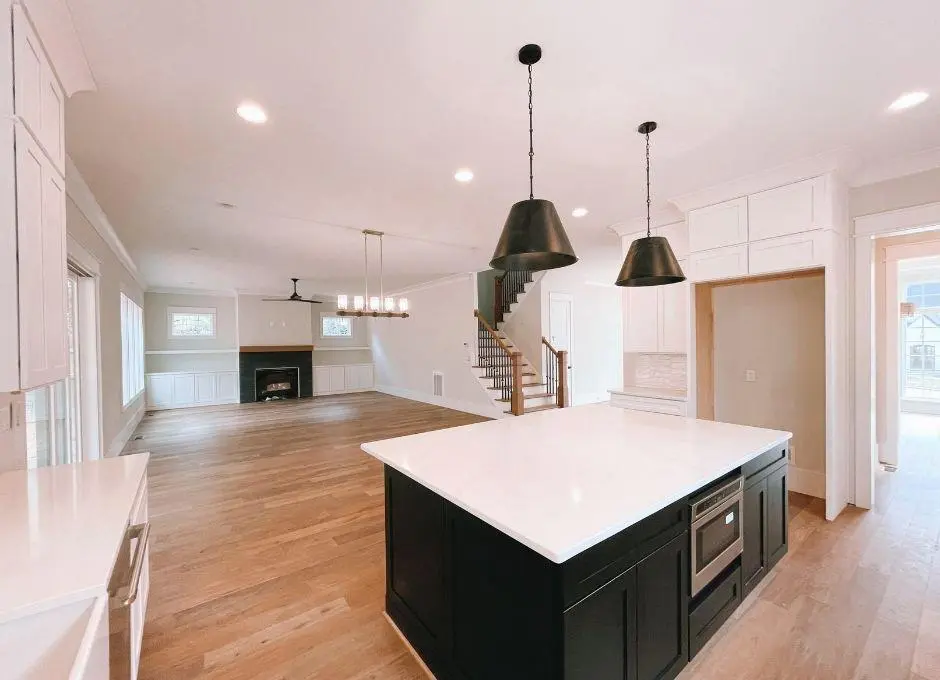
Dark tones can make spaces feel smaller.
Worn areas can stand out more in photos than they do in person.
Transitions between different flooring types can break up the flow of the home.
Sometimes that alone is enough to change how many people decide to come see it.
But here’s where it gets real.
A lot of homeowners assume:
“If I replace the flooring, I’ll get that money back.”
Sometimes that’s true.
A lot of times, it’s not.
If you spend $15,000 to $25,000 replacing floors just to get $15,000 to $25,000 more… you didn’t really gain anything.
You just traded time, effort, and disruption for a wash.
The better question is simpler:
Does the current flooring make the home feel move-in ready…
or does it make buyers feel like they’re walking into a project?
And this is where it gets tough to judge on your own.
When you’ve lived in a home for years, you stop seeing it the way a buyer does.
Things that feel normal to you stand out immediately to someone walking in for the first time.
In some cases, a deep clean, a few small touch-ups, and the right presentation is more than enough.
In others, the flooring quietly drags everything else down… even if the rest of the home is in great shape.
That difference is what actually matters.
Not the flooring itself.
How it affects the way the home is experienced the moment someone walks in.
My final thoughts:
Flooring updates can make a real difference, but it’s also one of the easiest places for costs to get out of hand.
Before putting money into new floors, the goal is to be sure you’re improving how the home feels to a buyer… not just updating something because it’s been there a long time.
The right updates help a home feel clean, easy, and move-in ready.
The wrong ones just add expense without changing how the home is experienced.
It’s less about doing more… and more about putting the effort in the spots that actually move the sale forward.
Categories
- All Blogs 32
- Around Town 2
- Before You Sell 1
- Community Development 1
- Community Growth 2
- Community Trends 1
- Community Updates 1
- Established Neighborhoods 1
- Growth & Development 1
- Holidays & Seasonal 1
- Home Buying 1
- Home Preparation 1
- Home Strategy 3
- Home Transitions 1
- Homeowner Perspective 1
- Homeownership 1
- Housing Market Updates 3
- Johnson Ranch 1
- Living in Roseville 2
- Local Developments 1
- Local Growth & Change 1
- Local Insights 2
- Local Lifestyle Day Trips & Experiences Roseville & Foothill Living 1
- Local Living 6
- Local Market Insights 2
- Local Spotlight, Community & Lifestyle 1
- Market Perspective 2
- Market Trends 1
- New Development 1
- Northern California 1
- Outdoor Recreation 2
- Placer County Real Estate 5
- Planning Ahead 1
- Preparing Your Home 1
- Relocation 2
- Roseville & Rocklin 1
- Roseville Community News, 1
- Roseville Growth 1
- Roseville Lifestyle 2
- Roseville Neighborhoods 1
- Roseville Real Estate 9
- Roseville, Local Updates 2
- Selling Strategy 1
- Selling Your Home 3
- Things To Do Near Home 2
- What's Moving in Roseville 1
- What’s Moving in Roseville 1
Recent Posts