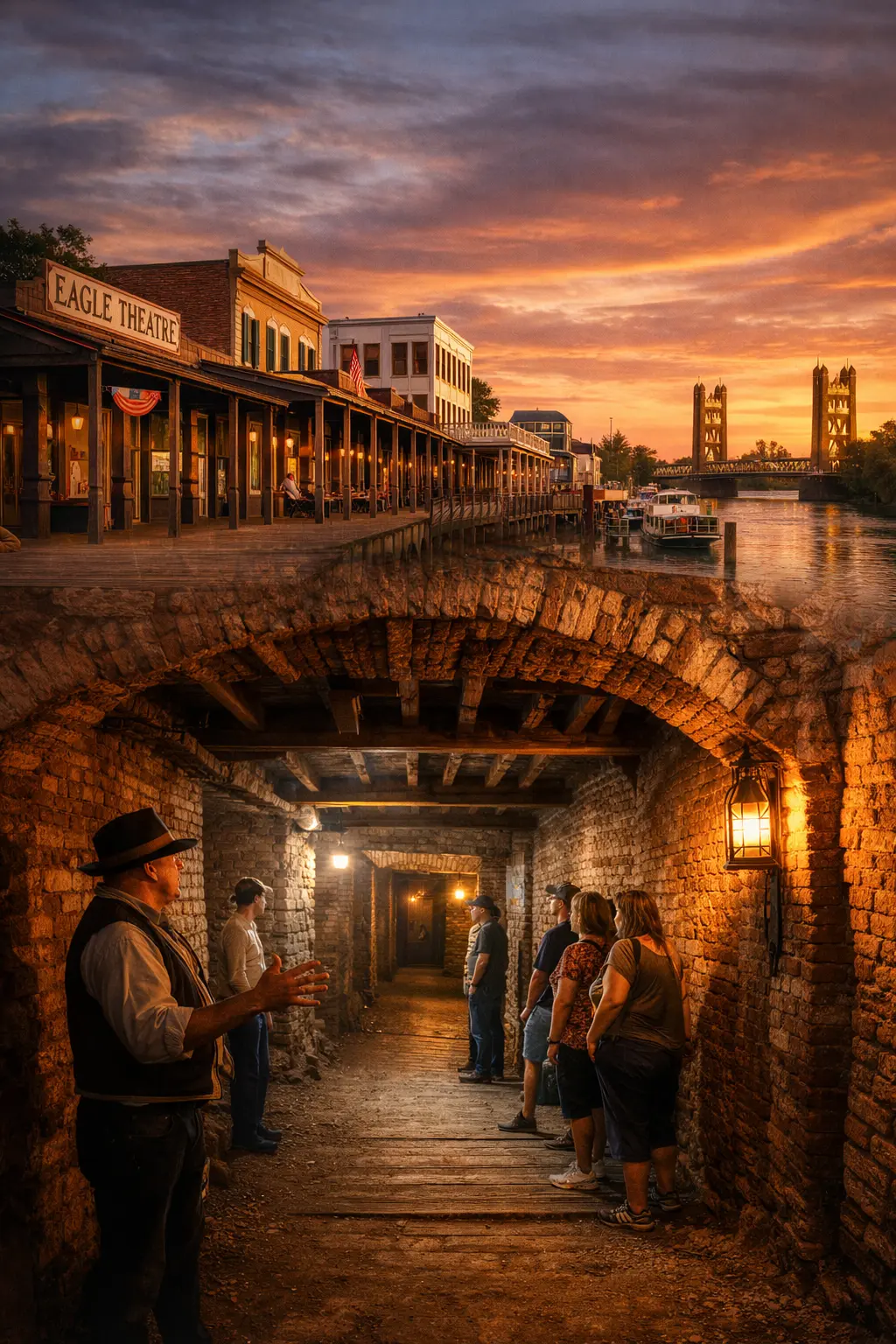
Ever Wonder What’s Beneath Old Sacramento?
A Short Drive From Placer County
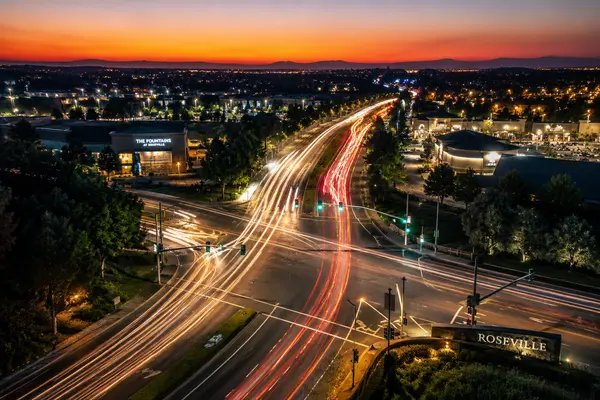
From Roseville, Rocklin, or Lincoln, you’re about 20–30 minutes from the Old Sacramento Waterfront.
Coffee in hand.
Family visiting from out of town.
Maybe a stop by the river before heading home.
It feels familiar.
But very few people realize the original city is still there — just below street level.
Why Sacramento Raised the Streets
In the mid-1800s, Sacramento had a serious flooding problem.
After repeated floods devastated the growing city, officials made a radical decision:
They raised the streets.
Entire blocks were elevated by roughly one full story. Buildings were filled in. Sidewalks were lifted. New storefront entrances were built above the old ones.
What used to be ground level became underground.
And much of it still exists.
What the Underground Tour Is Like
It’s not flashy or theatrical.
It’s a surprisingly interesting 60–90 minute tour through brick corridors, original storefront foundations, and the old raised sidewalks that once carried Gold Rush-era foot traffic.
You see the construction layers.
You understand how the city adapted.
You get a sense of what Sacramento looked like before it became what it is now.
It’s simple — but memorable.
One Easy Day Trip
One of the underrated advantages of living in Placer County is access.
Within 30 minutes, you can be:
-
Walking through 1800s brick tunnels
-
Having lunch along the river
-
Visiting the California State Railroad Museum
-
Or just strolling the waterfront with nowhere particular to be
In one direction you have Folsom Lake.
In another, the Sierra foothills.
And just south — layers of California history.
It’s easy to overlook how much is within reach.
My final thoughts
It’s interesting how cities evolve.
Streets get raised. Buildings get modernized. New layers are built over old foundations. But the original structure is still there — even if we don’t always see it.
The same is true of communities.
There’s history beneath the surface. Stories that shaped what exists today. Decisions made decades ago that still influence how a place feels.
Sometimes it’s worth slowing down and exploring what’s been there all along.
We live near more than we think.
And often, the most interesting parts are just below street level.
Categories
- All Blogs 32
- Around Town 2
- Before You Sell 1
- Community Development 1
- Community Growth 2
- Community Trends 1
- Community Updates 1
- Established Neighborhoods 1
- Growth & Development 1
- Holidays & Seasonal 1
- Home Buying 1
- Home Preparation 1
- Home Strategy 3
- Home Transitions 1
- Homeowner Perspective 1
- Homeownership 1
- Housing Market Updates 3
- Johnson Ranch 1
- Living in Roseville 2
- Local Developments 1
- Local Growth & Change 1
- Local Insights 2
- Local Lifestyle Day Trips & Experiences Roseville & Foothill Living 1
- Local Living 6
- Local Market Insights 2
- Local Spotlight, Community & Lifestyle 1
- Market Perspective 2
- Market Trends 1
- New Development 1
- Northern California 1
- Outdoor Recreation 2
- Placer County Real Estate 5
- Planning Ahead 1
- Preparing Your Home 1
- Relocation 2
- Roseville & Rocklin 1
- Roseville Community News, 1
- Roseville Growth 1
- Roseville Lifestyle 2
- Roseville Neighborhoods 1
- Roseville Real Estate 9
- Roseville, Local Updates 2
- Selling Strategy 1
- Selling Your Home 3
- Things To Do Near Home 2
- What's Moving in Roseville 1
- What’s Moving in Roseville 1
Recent Posts